DRU
In Ceres, sexuality is no secret.
It doesn't matter who you love, who you desire, or who you choose to be with. Mother Ceres does not manage her children's intimacy. In Ceres, there are duties. You work. You study. You contribute. You take part in the continuity of society. And what you do with your free time is, for the most part, your own business.
That is why, in the world of Ceres, Dru's romance with Theo and her relationship with Ana are not acts of rebellion. They are not a manifesto. They are not a secret. They are simply part of her life.
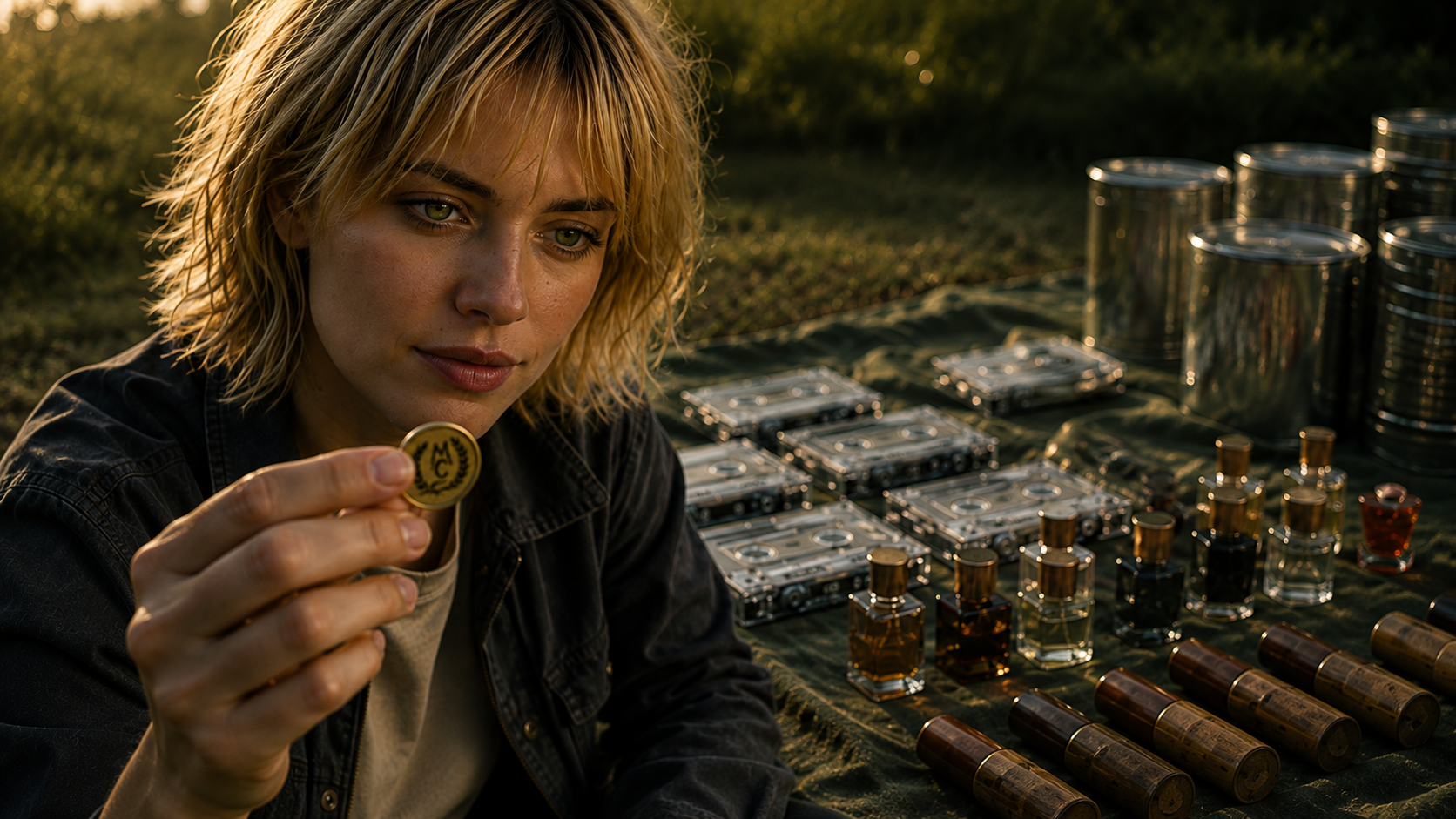
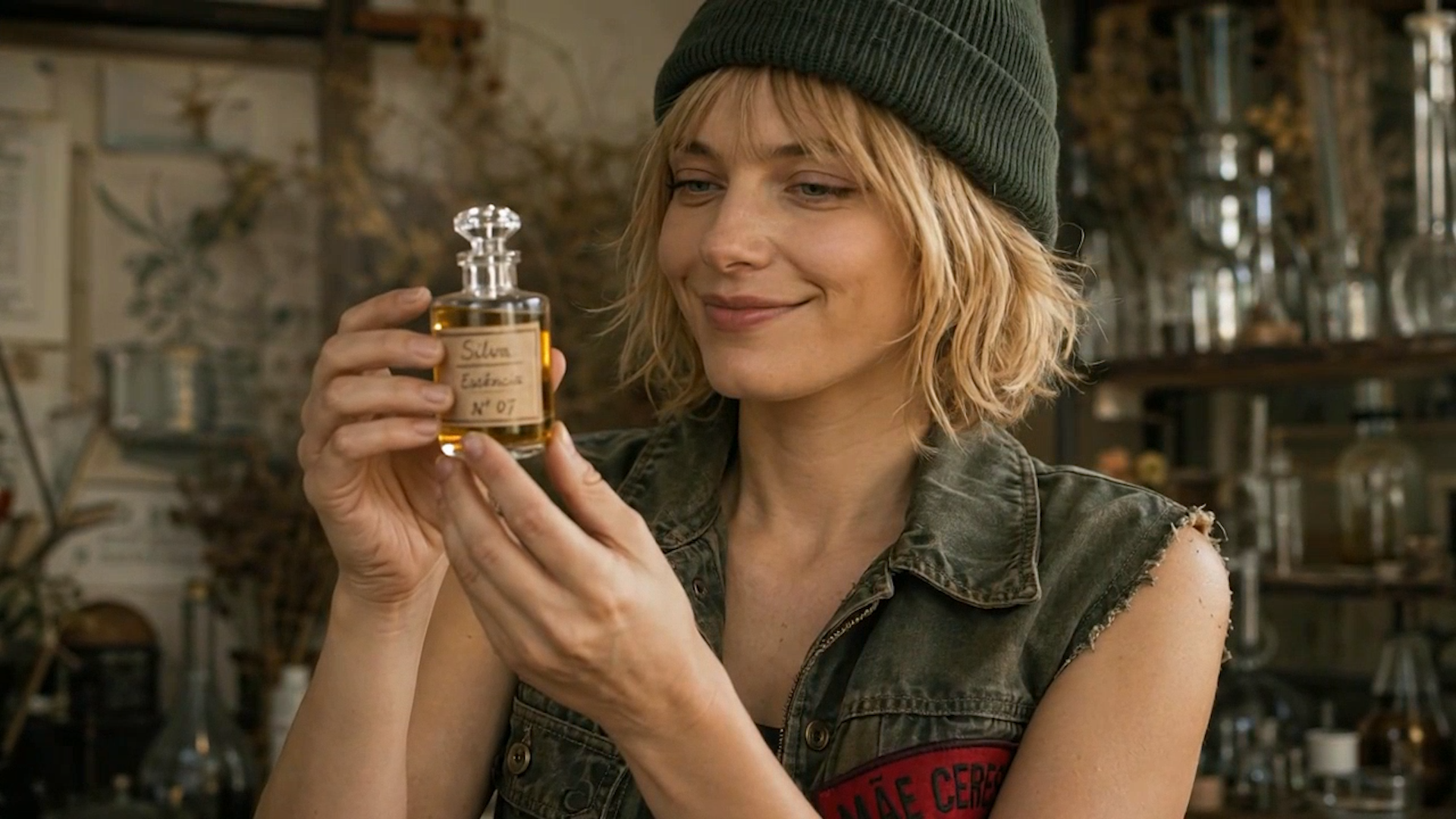
Dru wants to be loved. She wants to return that love. She wants to laugh, put on makeup, make perfumes, trade tapes, collect coins and trinkets, run through the wheat fields, and enjoy her own small moments of happiness.
But there is something that can be far more dangerous in Ceres than sex: commerce.
Because sex belongs to the individual. Commerce creates relationships between individuals. Goods circulate. Information circulates. Objects circulate. Desires circulate. And when something begins to circulate, Ceres needs to know how far it can go.
Dru is a trader. And perhaps she doesn't even realize how much more dangerous that makes her than her own sexuality.
What no one notices, because she never lets them notice
Dru is the school's unofficial broker of everything — objects, tapes, coins, secrets, bodies. This doesn't make her calculating or cold; it makes her the person most connected to everyone, and therefore the most closely watched without her knowing it. She doesn't build a network out of an ambition for power — she builds one because that's how she loves the world: trading, offering, creating small bonds that make her feel part of something greater than the role assigned to her.
With Theo, she experiences the only kind of love the book treats with complete dignity and without calculation: even knowing that he "belongs" to another force, even watching his eyes cease to be hers — "now they belong to her" — Dru accepts losing without competing. It isn't empty resignation. It's an ethics of her own, rare in a world that treats affection as a resource or a function. With Ana, it's different: pleasure without demands, a body without promises, exchanged almost like the very goods she trades — lipstick, perfume, a moment without the risk of disappointment.
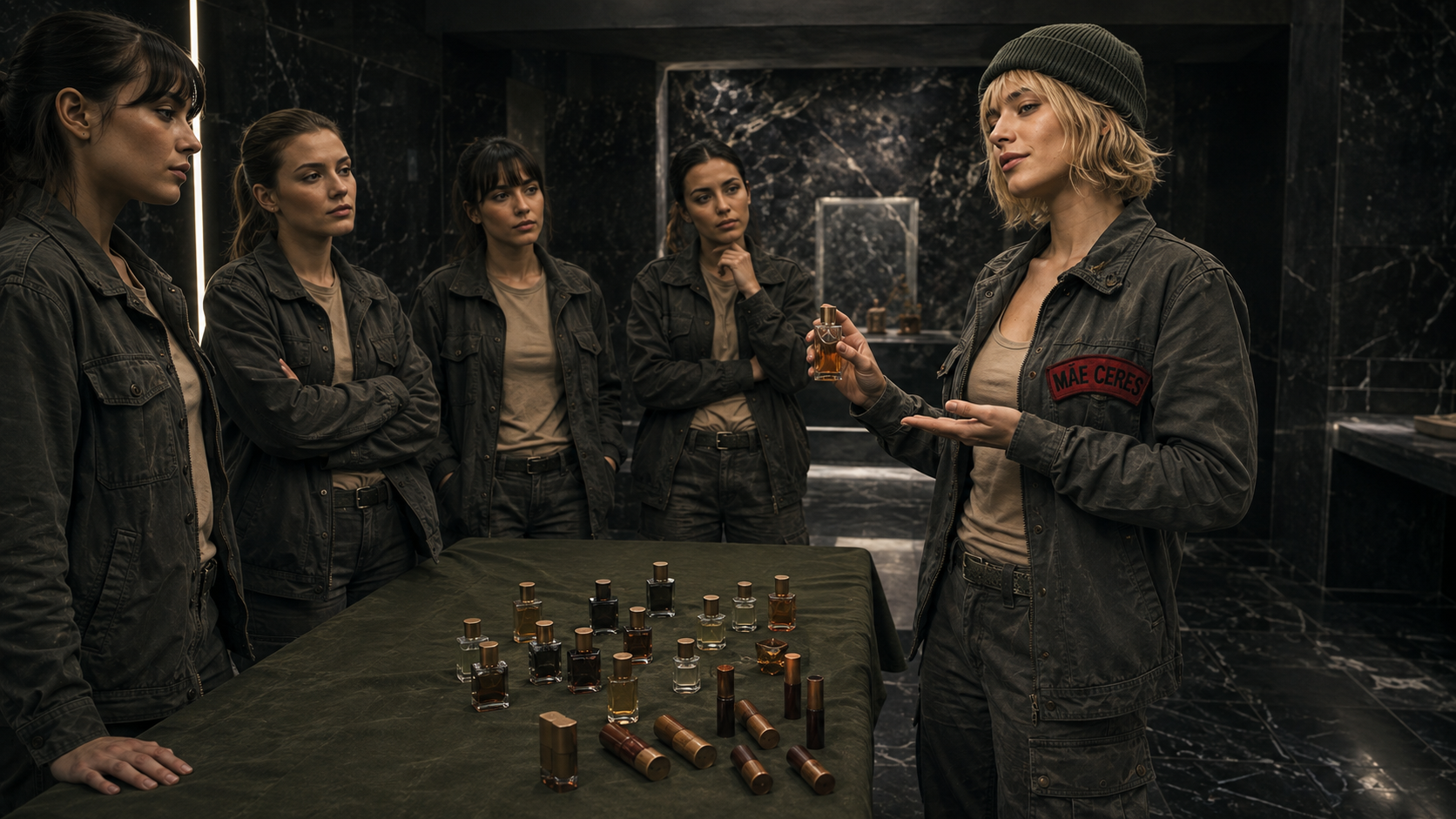
And then, through her own small act of art, she creates a perfume that smells like Mother Ceres — perhaps the most personal thing she has ever done, turning institutional devotion into an intimate object, something one can wear, keep, and experience up close. It's the kind of act that only makes sense coming from her: taking something grand and distant (the Mother, the system, the black marble) and reducing it to something small, fragrant, tangible — outside any assigned function, created simply for the love of creating.
Ironically, it is this very gesture that seals her fate. The system does not punish Dru for loving whom she loves, nor for selling small things in the school's underground market — it punishes her for having too much talent to be ignored. The perfume born of personal affection is absorbed, formalized, turned into an official profession. Dru becomes an apothecary. Her freest act — creating something simply because she felt like it — is swallowed by the same machine that "feeds, educates, and devours" everything it touches.
Dru has no freedom.
But she flirts with it. Through perfumes, tapes, coins exchanged for the pleasure of exchanging, and the love she gives without asking for anything in return. And somehow, she creates small pieces of herself — even knowing, deep down, that the leaden world she lives in will sooner or later find a way to claim back every fragment of freedom she managed to create with her own hands.
Video - Dru: Lead PerfumeRead the first three chapters for free